





Although Luxated patella is not a condition that needs to be treated in the emergency room, getting your dog tested for this disorder prevents it from becoming worse.
All dogs should be tested because a slipped kneecap can affect dogs of all breeds and sizes. However, if you own a small or a toy dog breed, you should have him tested for luxated patella as soon as possible.
Responsible breeders should know that this condition is hereditary, and therefore, have their puppies tested at around six weeks of age, preferable before sending them to their new homes.
Treatment Options For A Slipped Kneecap
Physical tests, along with the length of time that the dog is showing symptoms such as limping, skipping, and carrying his leg, will determine his diagnosis. To indicate the severity of the condition, an X-ray of the thigh bone and the knee will be performed.
Treatment is not required for Grade I, although you should check your dog in case the problem gets worse. For Grades II, III, and IV, surgery can be performed in order to repair the malformation.
Surgery is done by an Orthopedic surgeon and includes correcting the dog’s bone alignment, tightening his joint capsule, and/or deepening the groove where the kneecap rides.
The cost for this kind of surgery is between $1,500 to $3,000, depending on the severity of the case.
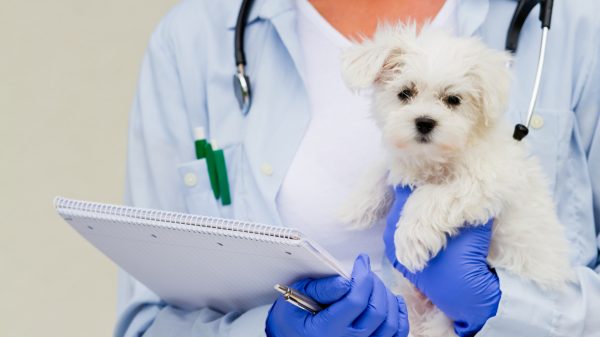
Although not a dire emergency, it is best to consult your vet as soon as possible if your dog is suffering from a slipped kneecap. If surgery is needed, your vet will refer you to an orthopedic specialist who will perform the operation.
Don’t wait! If your dog has a condition of Grade II, Grade III, or Grade IV, it is better to give him the surgery now before the condition worsens. Further damage of the bone and joint may make the outcome of the surgery less successful.
Caring For Your Dog After The Surgery
After surgery, your vet will prescribe medications for your dog’s pain as well as anti-inflammation to be taken for an average of one week. Your dog will need plenty of rest during this time, meaning very little activity for at least 1 ½ weeks.
He should be kept on the leash when outside the house. Keep him in a small and comfortable room to avoid jumping, running around, or other types of activities that can put pressure on his knee.
Physical therapy will begin around 1 week after the surgery. Take him for a slow walk for about five minutes. If possible, take him swimming. Your dog should be able to handle longer walks on the leash six weeks after the surgery and be able to have complete recovery and normal use of his knee approximately 15 weeks after the surgery.